
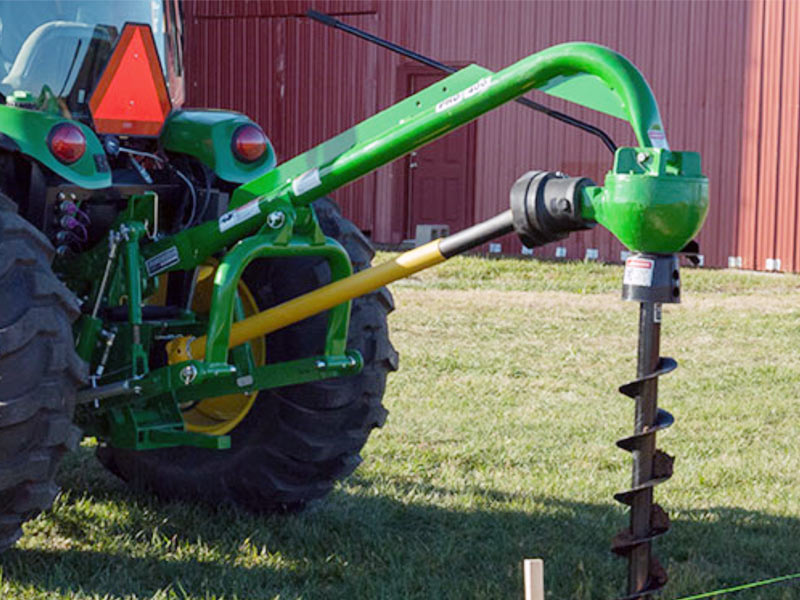
Attach to 3-point hitch, set level, low PTO speed, drill vertically, clear soil.
If you want clean, straight holes fast, this guide is for you. I have logged many hours drilling fence lines, decks, and farm jobs. I will show you how to use a post hole digger on a tractor with clear steps, pro tips, and safety notes. You will learn how to pick the right auger, set the PTO, handle tough soils, and avoid the costly mistakes I made early on.
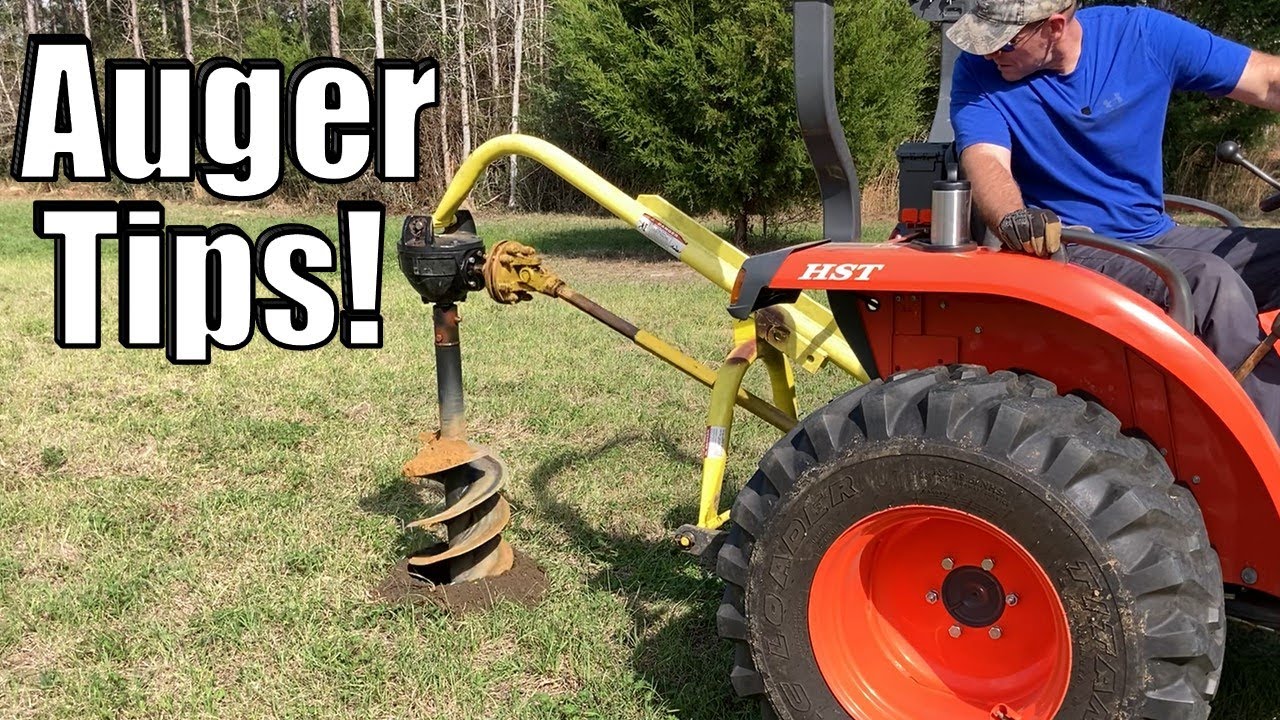
How a Tractor Post Hole Digger Works
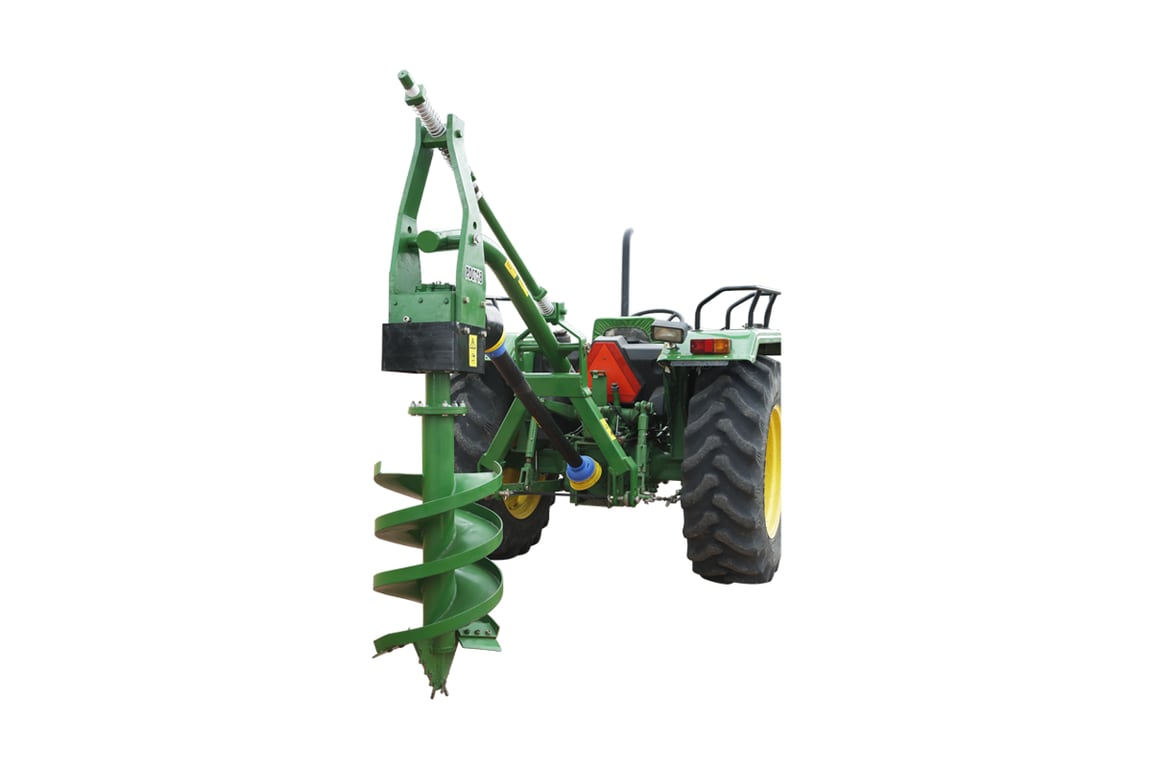
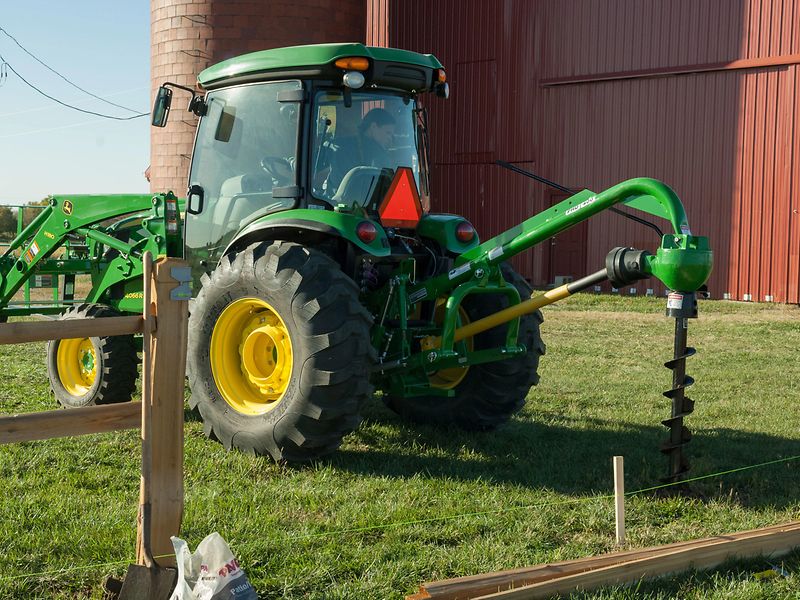
A tractor post hole digger uses your 3-point hitch and PTO to spin an auger. The gearbox reduces speed and boosts torque. The auger flights move soil up and out as it cuts.
Most units run on a 540 PTO. At rated speed, auger RPM is often near 150 to 250. You do not need full throttle for most holes. Smooth control beats raw speed.
I will cover how to use a post hole digger on a tractor from setup to cleanup. You will see what to check, how to dig straight, and how to avoid jams. This is the same process I use on ranch builds and client jobs.
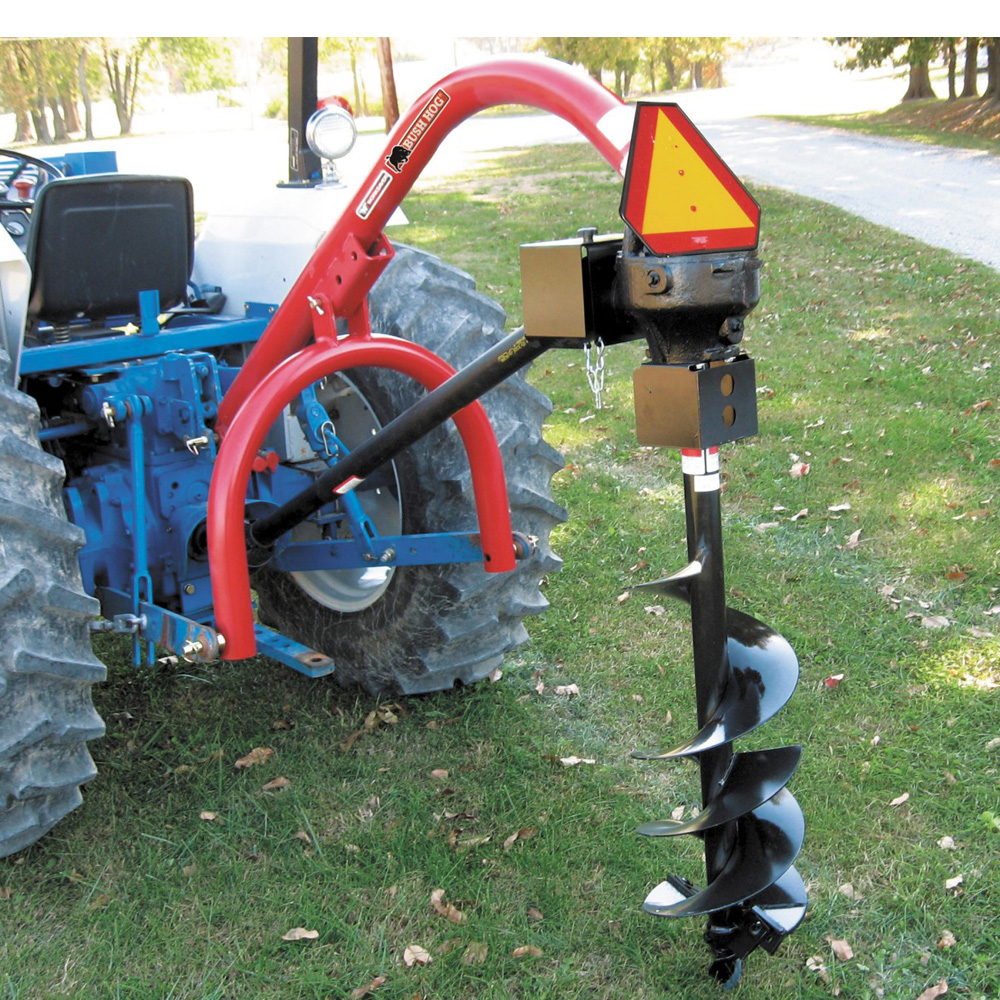
Safety First: What To Check Before You Dig
Call 811 to locate utilities. Never guess. Keep kids, pets, and helpers at least 10 feet away. Only one operator near the auger.
Wear snug clothes, gloves, and eye protection. No loose strings. Use the correct shear bolt for your gearbox. That bolt protects your driveline if you hit a rock or root.
Walk the site. Mark hole centers with paint or stakes. Note slopes, roots, and buried lines. Plan tractor access and exit. This prep is key when learning how to use a post hole digger on a tractor.

Tools and Setup
You need a tractor with a working 3-point hitch and PTO. Check your manual for category size. Most diggers are Cat 1 or 2. Match them.
Gather gear:
- Post hole digger frame with gearbox
- Auger bit sized for your posts or footers
- PTO shaft with safety shields
- Shear bolts, pins, and lynch pins
- Tape, paint, line, and a level
- Bar or shovel to clean loose soil
Park on level ground for hookup. Grease all zerks on the PTO shaft and auger. Check gearbox oil. Inspect for bent parts or cracked welds. These checks matter when you learn how to use a post hole digger on a tractor.

Step-by-Step: How To Use a Post Hole Digger on a Tractor
Follow these steps for straight, clean holes.
- Hitch and PTO
- Back up to the digger. Attach lower arms, then the top link.
- Adjust stabilizers so the boom cannot swing.
- Connect the PTO shaft with the tractor off. Make sure the lock clicks.
- Set Angle and Height
- With the auger hung free, adjust the top link so the auger hangs plumb.
- Drop the 3-point so the tip is just above the ground at your mark.
- Mark and Align
- Sight down the auger. Line it with your stake or paint dot.
- I like to set a long string line for fence runs. It keeps holes on track.
- Engage PTO at Low Throttle
- Start at idle. Engage the PTO. Raise RPM till the auger starts to bite.
- Keep engine speed low. Let the gearbox do the work.
- Drill in Short Bites
- Lower a few inches. Lift to clear spoil. Repeat. This keeps the hole clean.
- If soil packs, stop the PTO. Raise the auger. Let the dirt spin off.
- Keep It Plumb
- Watch the auger from two sides. Small top link tweaks help.
- On slopes, face uphill if you can. The auger will track straighter.
- Depth and Diameter
- Drill 1/3 to 1/2 of the post length for depth. More for corner posts.
- Use the right bit size. Many posts want holes 2 to 4 inches wider.
- Clear, Check, Repeat
- Stop the PTO before moving. Lift the auger clear.
- Move to the next mark. Repeat the process.
This is the cleanest way to learn how to use a post hole digger on a tractor. Short bites, low speed, good alignment, and a clean hole every time.

Picking the Right Auger, PTO Speed, and Tractor Size
Match auger size to the job. For 4×4 posts, a 9-inch auger is common. For 6×6 posts, 12 inches is safer. For deck footings, check local code for width and depth.
Use low throttle to control bite. Your PTO is rated at 540 RPM, but you can run below that. Most digging feels best when the auger turns steady, not fast. Smooth speed helps when you focus on how to use a post hole digger on a tractor.
Mind tractor weight. A light tractor may float on hard soil. Add ballast to the rear tires or a front weight. More weight improves control and keeps the auger steady.
Soil-Specific Techniques
Every soil acts different. Here is what works in the field.
Clay
- Run slow. Clear spoil often.
- Add dry sand to lube the flights if clay smears and sticks.
Sand
- Go steady without stops. Stops can cause cave-ins.
- Use a digging spoon to clean sides if needed.
Rocky ground
- Use a rock point or pilot bit if your auger allows it.
- Expect shear bolts to pop. Keep extras ready.
Roots and stumps
- Stop at first binding. Cut roots with a saw or bar.
- Pushing through can twist the auger or snap the bolt.
Frozen ground
- Pre-drill with a smaller bit if you have one.
- A heater barrel or hot sand on the mark can help thaw a small spot.
These field tricks will save time when you practice how to use a post hole digger on a tractor in mixed soils.

Troubleshooting and Common Mistakes
Avoid these common errors. I made most of them once.
Auger will not bite
- Sharpen the cutting edges. Check for dull or bent teeth.
- Reduce the top link length a bit to set a more aggressive angle.
Auger binds and gets stuck
- Stop the PTO. Raise a little to free it. Reverse if your model allows it.
- Drill in short bites. Clear spoil more often.
Holes are not straight
- Check bubble level on the boom. Adjust the top link.
- Sight from two sides before you start each hole.
Broken shear bolts, again and again
- Use the correct grade bolt. Do not use hardened substitutes.
- Slow down in rocky soil. Let the auger cut, not jam.
These tips are vital to master how to use a post hole digger on a tractor without damage or delay.
Productivity Tips for Fence Lines and Deck Footers
Lay out the whole line first. Drive stakes and snap a string. Mark centers with spray paint. Drill all the pilot holes first if soil is tough.
Group tasks. Move the tractor in a straight pass to save time. Keep spare shear bolts, pins, and a wrench in a bucket on the fender. Little things slash downtime.
Set a rhythm. I drill five holes, then set posts and tamp. This keeps energy high and holes from caving. This method makes how to use a post hole digger on a tractor feel smooth and fast.
Maintenance and Storage
Grease the PTO shaft and boom pins before each day. Check gearbox oil weekly in heavy use. Replace worn teeth and pilots.
Clean the auger after each job. Dry and spray a light oil on the flights to prevent rust. Store the digger on a sturdy stand so hookup is safe. A good stand also helps when you teach others how to use a post hole digger on a tractor.
Budget, Time, and When to Hire
Plan on 2 to 6 minutes per hole in easy soil. Hard or rocky ground can take much longer. Set a pace you can keep.
Buying a new tractor post hole digger can cost from a few hundred to a few thousand dollars. Renting for a day is often a smart start. If you have deep bedrock or large footings, consider a skid steer with hydraulic down pressure. It can be worth it. That insight is part of knowing how to use a post hole digger on a tractor the smart way.
Frequently Asked Questions of how to use a post hole digger on a tractor
What PTO speed should I use?
Run at low throttle and increase until the auger cuts smooth. You rarely need full 540 PTO speed to dig clean holes.
How deep should my holes be for fence posts?
A good rule is 1/3 of the post length in the ground. Add depth for corner posts and high-wind areas.
Can I reverse the auger if it gets stuck?
Some gearboxes have reverse. Many do not. If you cannot reverse, stop the PTO and lift in small moves to free it.
What size auger do I need for a 4×4 post?
A 9-inch auger works for most 4×4 posts. If soil caves or frost is deep, use 10 or 12 inches and backfill well.
Do I need down pressure to dig hard ground?
Most 3-point diggers do not have down pressure. Extra weight, slow feed, and sharp teeth help. For very hard ground, a hydraulic unit may be better.
How do I keep holes straight on a slope?
Face uphill if you can. Set the top link so the auger hangs plumb, and watch from two sides as you start the hole.
What safety steps are non-negotiable?
Call 811 before you dig, use the correct shear bolt, and keep clear of the spinning auger. Shut off the PTO before clearing jams.
Conclusion
You now know how to use a post hole digger on a tractor from setup to finish. Keep speeds low, drill in short bites, and stay level. Prep the site, match the auger to the job, and respect safety every time.
Take these steps to your next fence or deck project. Start with three practice holes to lock in the rhythm. If this helped, share it with a friend, subscribe for more tractor tips, or leave a question and I will help you dial in your setup.