
Sharpen mower blades by removing, filing at 30°, balancing, and reinstalling safely.
If you want a yard that looks clean, learn how to sharpen lawn mower blades the right way. I’ve tuned blades for years, from small push mowers to heavy riders. In this guide, I’ll show you what works, what fails, and why a sharp blade saves time, fuel, and your grass. You’ll get simple steps, pro tips, and clear checks so your cut looks crisp after every pass.
Why sharp blades matter
A sharp blade slices clean. A dull blade rips the grass. Torn grass looks brown at the tips and invites disease. This leads to thin spots and weeds.
Sharp blades cut faster and use less fuel. Tests on turf show dull blades raise engine load and stress. That means more heat and more wear. Knowing how to sharpen lawn mower blades keeps your yard healthy and your mower happy.
You also get a safer cut. A clean slice lowers clumps and leaves a smooth stripe. It feels like a fresh haircut for your lawn.

Safety and tools checklist
First, kill all power. Remove the spark plug wire on gas mowers. Pull the battery and safety key on electric mowers. Shut off fuel if you can. Work on a flat, stable surface.
Tools I use and trust:
- Heavy gloves and eye protection
- Hearing protection if using power tools
- Socket set and breaker bar
- Wood block to stop blade spin
- Permanent marker or chalk
- Stiff brush and rag
- Penetrating oil for stuck bolts
- Bench vise or strong clamps
- Flat mill file or 10–12 inch bastard file
- Angle grinder with 60–80 grit flap disc
- Bench grinder (optional)
- Blade balancer cone or a sturdy nail on a wall
- Torque wrench and your mower manual
Set your tools where you can reach them. It saves time and avoids slips. This is the base of how to sharpen lawn mower blades well.
Inspect and remove the blade
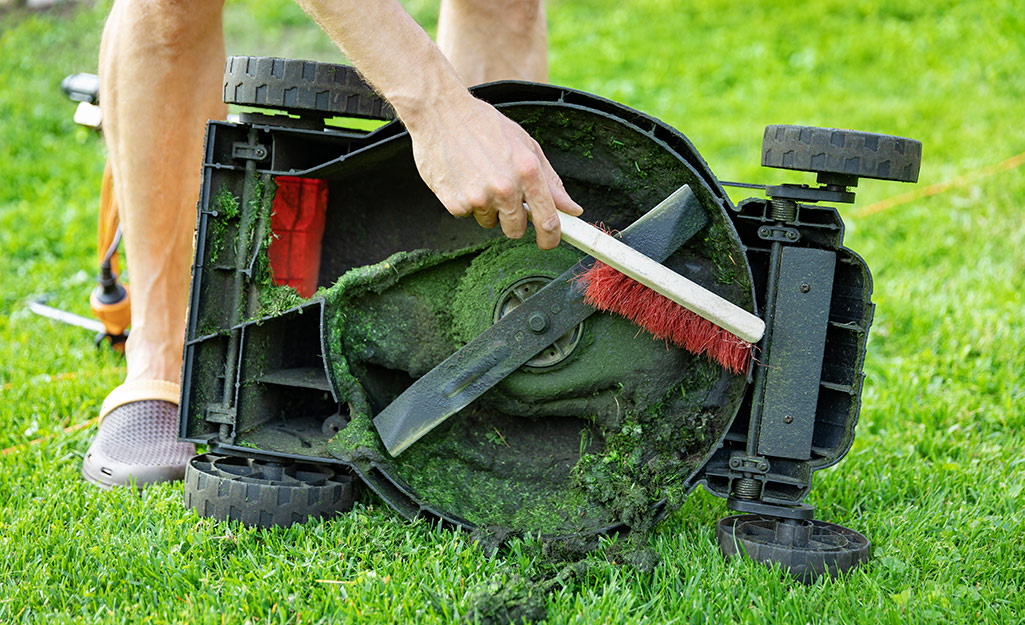
Tip walk-behind mowers with the carburetor and air filter up. This helps stop oil or fuel from leaking. Riders need the deck lowered, the key out, and the blade blocked.
Do this step by step:
- Mark the bottom face of the blade. A simple line or “BOTTOM” helps you reinstall it right side down.
- Wedge a wood block in the deck to hold the blade.
- Loosen the bolt. A breaker bar helps. Add penetrating oil if it fights you.
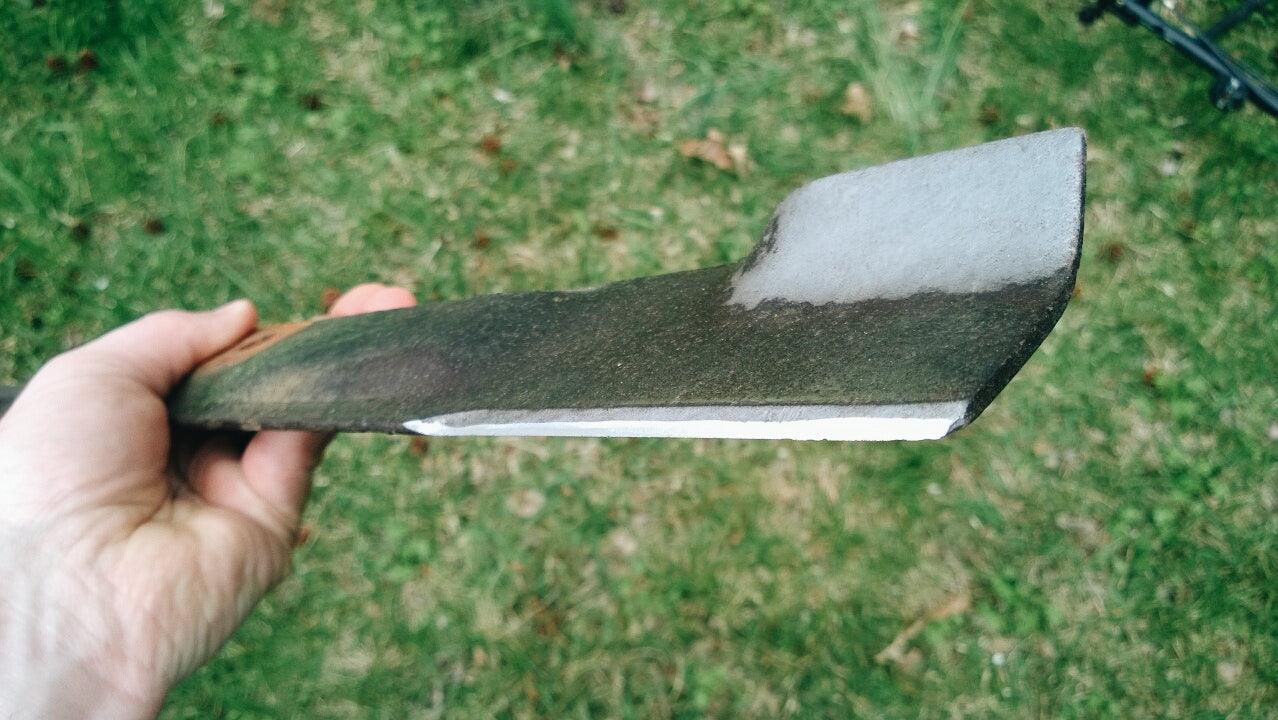
- Note the order of any washers. Clean the blade with a brush so you can see the edge.
Check for cracks, bends, or chunks missing. If you see any of these, replace the blade. No fix will make a cracked blade safe.
Choose your sharpening method
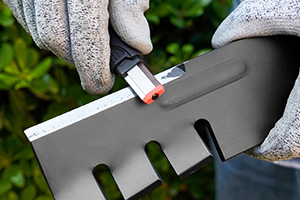
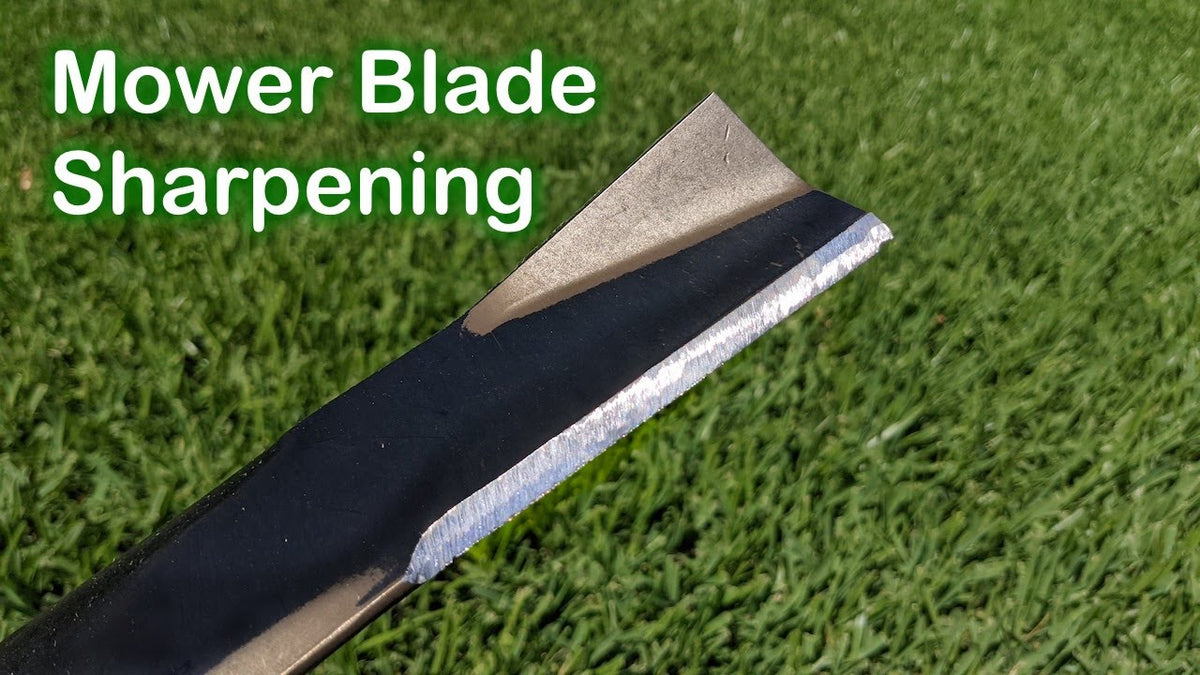
You have options. Pick what fits your tools and comfort. No matter the method, keep the factory bevel. Most mower blades have about a 30° edge. Do not make it razor thin. A tiny flat at the edge lasts longer and resists nicks. Work both sides the same to keep balance.
Hand file method (quiet and safe)
- Clamp the blade in a vise with the cutting edge up.
- Push the file along the bevel in one direction. Use smooth strokes.
- Keep the angle steady. Follow the existing slope.
- Count strokes and match the other side.
- Lightly knock off the burr on the back with one or two file passes.
This is my go-to for control. It is slow, but clean. It is a great start for anyone learning how to sharpen lawn mower blades.
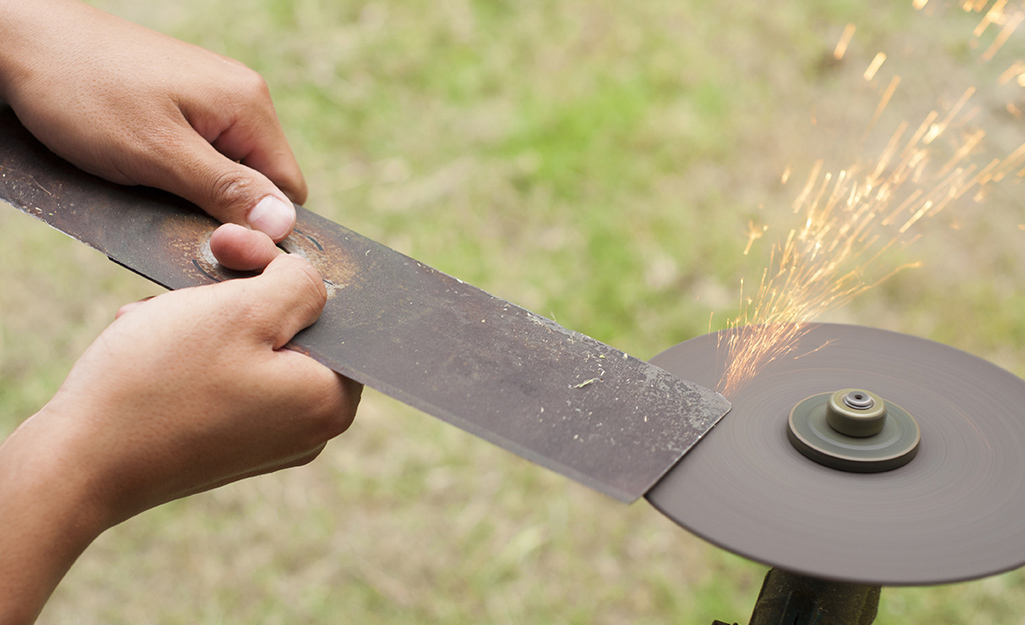
Angle grinder method (fast, precise with care)
- Fit a 60–80 grit flap disc. It runs cooler and is easier to aim.
- Brace the grinder. Move along the bevel. Do not gouge.
- Make short passes. Dip the blade in water if it warms up.
- Match strokes on the other side. Keep the angle the same.
I use this on blades with big nicks after a rock strike. It saves time but demands a steady hand.
Bench grinder method (shop speed)
- Use a clean, dressed wheel. Stand a bit to the side on start-up.
- Touch the blade to the wheel with light pressure.
- Keep the 30° angle. Keep moving to avoid heat.
- Quench often. Match both sides.
This is fast but can eat steel if you rush. Watch the color. Blue edges mean heat damage.
Rotary tool or drill stone (touch-ups only)
- Good for tiny chips or a mid-season touch.
- Do not try to rebuild a bad edge with a small stone.
- Use light passes and cool often.
No matter the method, remove only what you need. Steel is your friend. You cannot put it back.

Balance, reinstall, and torque
Balance is vital. An unbalanced blade makes the mower shake. That can wreck bearings and spindles. It also leaves a wavy cut.
Use a balancer cone or a nail in a wall:
- Hang the blade on the center hole.
- If one side drops, it is heavy. Grind a bit from the heavy side’s bevel.
- Repeat until it sits level.
Clean the mounting faces on the blade and the spindle. Reinstall with the lift wings pointing up into the deck. Tighten to spec with a torque wrench. Many walk-behinds need about 35–60 ft‑lb. Many riders use about 70–90 ft‑lb. Check your manual for the exact number.
Spin the blade by hand to be sure it clears the deck. Reconnect power only after this check.
Post-sharpen checks and a simple schedule
Start the mower and listen. It should run smooth with no shake. Make one slow pass on the lawn. Look at the tips. Clean cuts mean your edge is good. White or brown, torn tips mean dull or wrong angle.
Simple schedule that works:
- Touch up every 8–10 mows for small yards.
- Full sharpen every 20–25 hours of use.
- Sharpen after you hit a rock, root, or metal.
- Replace when the blade is bent, cracked, or thinned far below the original width.
Keep a spare set of blades. Swap fast, then sharpen later. It is the easiest way to stay on track with how to sharpen lawn mower blades during the busy season.

Troubleshooting and common mistakes
If the mower vibrates:
- The blade is out of balance or bent.
- Rebalance or replace. Check the spindle for play.
If the cut looks ragged:
- The edge is rounded or the angle is off.
- Refile to the factory bevel. Remove burrs.
If the grass clumps:
- Edge is dull or deck is dirty.
- Sharpen and scrape the deck. Mow when grass is dry.
If the bolt will not budge:
- Use penetrating oil and let it sit.
- Try a breaker bar, then heat if safe. Avoid impact on weak spindles.
Mistakes to avoid:
- Grinding the edge paper-thin. It dulls fast and chips.
- Grinding only one side. That kills balance.
- Sharpening a cracked blade. That is a hard stop. Replace it.
- Skipping torque specs. Loose blades can slip. Over-tight can strip threads.
These checks come from years in the yard and the shop. When you learn how to sharpen lawn mower blades with care, these issues fade fast.
Frequently Asked Questions of how to sharpen lawn mower blades
How often should I sharpen mower blades?
For most lawns, sharpen every 20–25 hours of mowing. If you see torn tips or hit debris, sharpen sooner.
What angle should I use on the blade edge?
Stay near the factory angle, around 30°. Keep it uniform on both sides so the blade stays balanced.
Can I sharpen a mulching blade the same way?
Yes, follow the same bevel on the cutting edge. Do not grind the curved lift or the extra fins, as they shape airflow.
How sharp should the blade feel?
It should be sharp to the touch but not razor thin. A small flat at the edge lasts longer and resists damage.
Do I need to balance the blade after sharpening?
Yes, always. An unbalanced blade causes vibration, poor cuts, and can damage bearings.
Is it safe to use an angle grinder at home?
Yes, with care. Wear safety gear, use light passes, and cool the blade often.
When should I replace, not sharpen?
Replace if the blade is cracked, bent, or badly gouged. Also replace if the blade has lost a lot of width from wear.
Can I sharpen without removing the blade?
It is possible but not advised. It is hard to keep the angle, and you cannot balance the blade on the mower.
Conclusion
You now know how to sharpen lawn mower blades from start to finish. Disconnect power, remove the blade, restore the factory edge, balance it, and torque it right. The payoff is a clean cut, a healthier lawn, less fuel use, and a mower that runs smooth.
Make this part of your yard routine. Set a reminder. Keep a spare blade set. Try these steps on your next tune-up, and share how it goes. Want more simple lawn care guides? Subscribe or leave a comment with your next topic.