
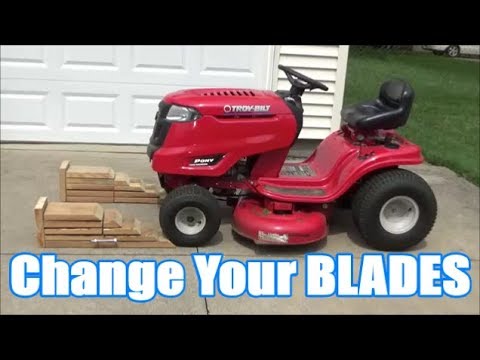
Disconnect power, lift the deck, block the blade, remove bolts, swap, torque, and balance.
If you want a smooth, even cut, fresh blades are your best friend. In this guide, you will learn how to change riding lawn mower blades like a pro. I will walk you through tools, safety, step-by-step work, and real tips from years in the yard and shop.

Why sharp blades matter and when to replace
Dull blades tear grass. That leads to brown tips and weak lawns. Sharp blades slice clean and promote thick growth.
Watch for these signs:
- The cut looks ragged or uneven.
- You need extra passes to get a clean cut.
- You see nicks, bends, or cracks on the blade.
- The mower vibrates more than normal.
A good rule of thumb is to inspect blades every 10 hours. Replace or sharpen when the edge feels blunt or has chips you cannot grind out. Many owners ask how to change riding lawn mower blades only after a bad cut. Do it sooner. Your lawn will thank you.
Tools, parts, and safety prep
Have the right gear ready. It makes the job fast and safe.
You will need:
- Socket set and a long breaker bar for stuck bolts.
- Torque wrench for correct tightening.
- Work gloves and eye protection.
- A block of wood to stop blade spin.
- A mower lift, ramps, or jack stands rated for the weight.
- Wire brush and shop rags to clean parts.
- New blades that match your model and deck size.
- Penetrating oil for rusty bolts.
- A blade balancer or a nail in a wall for balance checks.
Safety steps I never skip:
- Turn the mower off. Remove the key. Set the brake.
- Disconnect both spark plug wires or the battery negative cable.
- Work on a level surface.
- Support the mower with stands. Do not trust a jack alone.
These basics set you up for how to change riding lawn mower blades the right way.

Step-by-step: how to change riding lawn mower blades
Follow these steps. Keep them in order. Take a photo before you start. It helps with blade direction later.
- Prepare the deck
- Lower the deck to the lowest setting.
- Scrape off caked grass from under the deck with a plastic scraper.
- Spray a bit of penetrating oil on blade bolts if they look rusty.
- Raise and secure
- Lift the front of the mower with a lift, ramps, or a jack and stands.
- Make sure it is stable. Shake it gently to confirm.
- Slide a wood block between the blade tip and the deck to lock the blade.
- Remove the old blade
- Use the correct size socket on the blade bolt.
- Pull the breaker bar counterclockwise to loosen. A short pipe over the handle helps with leverage.
- Note the order of washers and cups. Keep them in order on the ground.
- Inspect parts
- Check the spindle threads. Clean with a wire brush.
- If a spindle wobbles, the bearing may be bad. Fix that before you cut again.
- Install the new blade
- Match the center hole style to your spindle.
- The sail or lift wing faces up toward the deck. The cutting edge faces the spin.
- Install washers in the same order you removed them.
- Tighten to spec
- Thread the bolt by hand first to avoid cross-threading.
- Use a torque wrench to tighten to the spec in your manual. Many riders use 45 to 90 ft-lb. Check your brand.
- Repeat for every blade.
- Final checks
- Spin blades by hand. They should move free and not hit the deck.
- Lower the mower. Reconnect power.
- Do a short test cut and listen for vibration.
That is how to change riding lawn mower blades from start to finish. Take your time. It is simple once you do it once.

Orientation, torque, and balance essentials
Blade orientation is easy to get wrong. The lift wing, the curved part, points up. The sharp edge leads the cut. If the blade has words, face them toward you when under the deck.
Torque matters. Too loose and the blade can slip. Too tight and you can strip the spindle. Most brands fall between 45 and 90 ft-lb, which is 61 to 122 N·m. Always check your manual for the exact number. Keep threads clean and dry unless your manual says to use thread locker.
Balance keeps vibration down. An unbalanced blade shakes the deck and wears bearings fast. Use a blade balancer. Or use a nail in a wall. Hang the blade on the center hole. If one side drops, remove a bit of metal from the heavy side with a file or grinder. Recheck. Repeat until it sits level.
If you want no shake and a crisp cut, this is how to change riding lawn mower blades the careful way.
Deck off or deck on: which method to choose
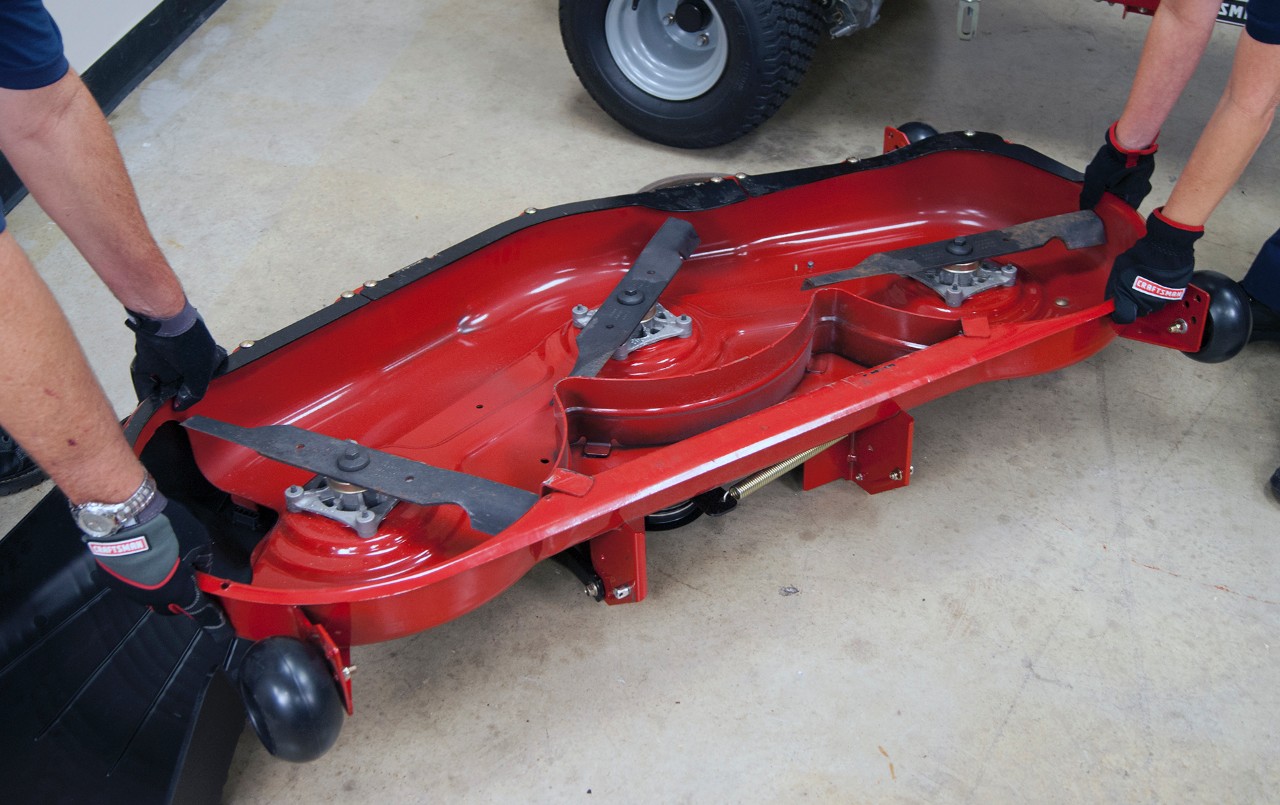
You can change blades with the deck on the tractor. This is fast and common. It works well if you have room to work under the deck.
Take the deck off if:
- You have a small space under the mower.
- The bolts are seized and need more control.
- You plan to service pulleys, belts, or spindles.
Removing the deck takes more time the first try. But it gives you full access. For some zero-turns, deck removal is easy and can speed up how to change riding lawn mower blades.

Common mistakes and how to avoid them
I have seen these mistakes again and again. Avoid them and you will be fine.
-
Installing blades upside down
Result: torn grass and poor lift. Fix: sail up, edge forward. -
Skipping the torque wrench
Result: loose blades or stripped spindles. Fix: torque to spec. -
Reusing cracked or bent blades
Result: risk of breakage. Fix: replace at once. -
Greasing the bolt threads
Result: wrong torque and loose bolts. Fix: dry, clean threads unless manual says otherwise. -
Forgetting to disconnect power
Result: serious injury. Fix: pull the plug wires or battery every time.
Little things matter in how to change riding lawn mower blades, and these habits keep you safe.

Brand and model tips that make the job smoother
Each brand has small quirks. These notes can save time.
-
John Deere
Many use star center holes and cup washers. Torque is often in the mid 60s ft-lb range. Some decks have timed blades. Do not rotate spindles out of sync if timed. -
Cub Cadet and Troy-Bilt
Commonly use 6-point star centers. Watch the order of the bell washer. Some have left-hand threads. Check the arrow on the spindle. -
Husqvarna and Craftsman
Use both round and star patterns. Belt guards can block bolt access. Removing one guard can help. -
Zero-turn mowers
Decks are wider and heavier. A mower lift or a floor jack with big stands helps. Replace blades in sets to keep cut even. -
Electric riders
Pull the key and remove the battery fuse or disconnect the pack per the manual. Never work near live circuits.
If you want to know how to change riding lawn mower blades for your brand, the manual is your best friend. The part number and torque live there.

Maintenance schedule, sharpening tips, and blade lifespan
How often should you swap or sharpen? It depends on your yard. Sandy soil dulls fast. Sticks and rocks cause chips.
Simple plan:
- Inspect after every 10 hours.
- Sharpen about every 20 to 25 hours in normal use.
- Replace when the cutting edge is thin, cracked, or bent.
- Replace in pairs or sets for multi-blade decks.
Sharpen with a file or a bench grinder. Keep the edge at a 30 to 40 degree angle. Do not chase a razor edge. A slight micro-bevel holds up longer. Always balance after sharpening.
A smart schedule reduces how often you face how to change riding lawn mower blades in a rush during peak season.

Disposal and recycling of old blades
Do not toss blades in the trash if you can avoid it. They are good steel.
- Drop them at a metal recycling center.
- Ask your local waste service about scrap metal days.
- Store old blades in a safe place until you can recycle. Wrap tips with cardboard.
Recycling turns a worn blade into new steel. It is a small step that helps.
Cost, time, and skill level
Here is what to expect the first time you try how to change riding lawn mower blades.
-
Time
Plan for 30 to 60 minutes. Stuck bolts can add time. -
Cost
New blades run 20 to 60 dollars each. A torque wrench costs more but lasts for years. -
Skill
Basic hand tools and patience are enough. Take photos as you go. You will nail it on the second try.
Frequently Asked Questions of how to change riding lawn mower blades
How often should I change riding mower blades?
Check every 10 hours. Replace or sharpen when dull, chipped, or bent. Many owners swap blades once a season in normal use.
Can I sharpen instead of replacing?
Yes, if the blade is not cracked or badly bent. Sharpen, then balance, and follow torque specs.
Which way do the blades go?
The curved lift wing faces up toward the deck. The sharp edge leads in the direction of rotation.
What torque should I use on blade bolts?
Most riding mowers use 45 to 90 ft-lb. Always confirm the exact value in your manual for your model.
Do I need to remove the deck to change blades?
No. Many people do it with the deck on the mower. Remove the deck only if space is tight or you need more service.
Why does my mower shake after changing blades?
The blade may be unbalanced, bent, or installed wrong. Recheck orientation, balance, and torque.
Are mulching blades worth it?
Yes, for fine clippings and less bagging. Make sure they match your deck and you have a mulching plug or baffles.
Conclusion
You now know how to change riding lawn mower blades with confidence. Gather the right tools, lock out power, keep blades oriented right, and torque to spec. Balance each blade and your cut will look clean and even.
Make a blade check part of your routine. Your lawn will improve fast, and your mower will last longer. Ready to level up your cut quality? Try this process on your next service day, then share your results or questions in the comments.